frontier field notes · no. 11 ↩ index
The distribution, while the launch date slipped

Threedoors.

The window Utexo named for USDT on Bitcoin - end of summer to mid-September - has passed without a consumer launch. But a B2B rollout has no launch day, only an accumulation of places the thing can appear. Over exactly those weeks, three were nailed down.

sources: WDK · UniSat · Solv reading: ~7 min status: none shipped yet
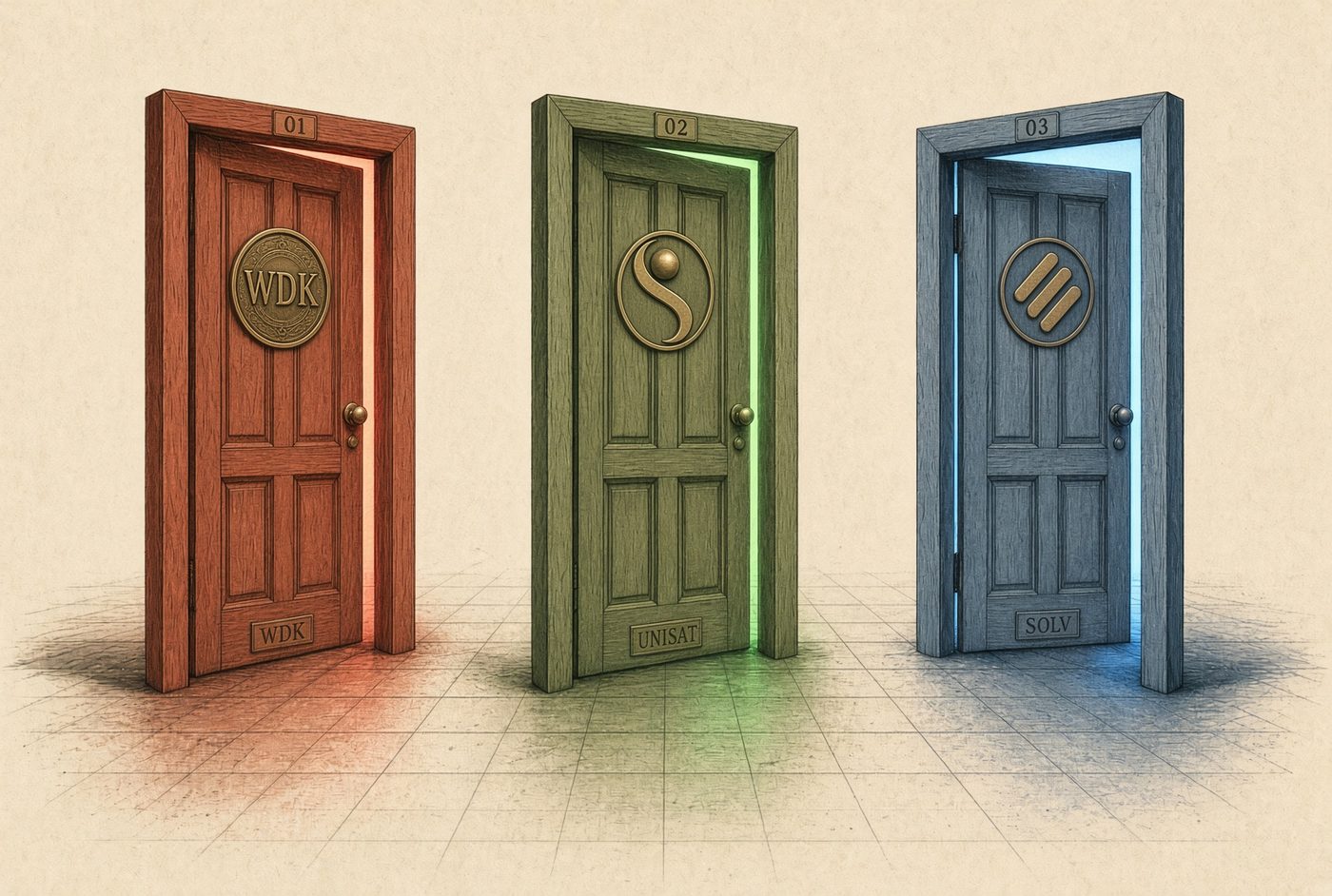
Three engraved doors - WDK, UniSat and Solv - each standing ajar with light spilling out
01 · WDK02 · UniSat03 · Solv
Scroll
door 01 what's behind it
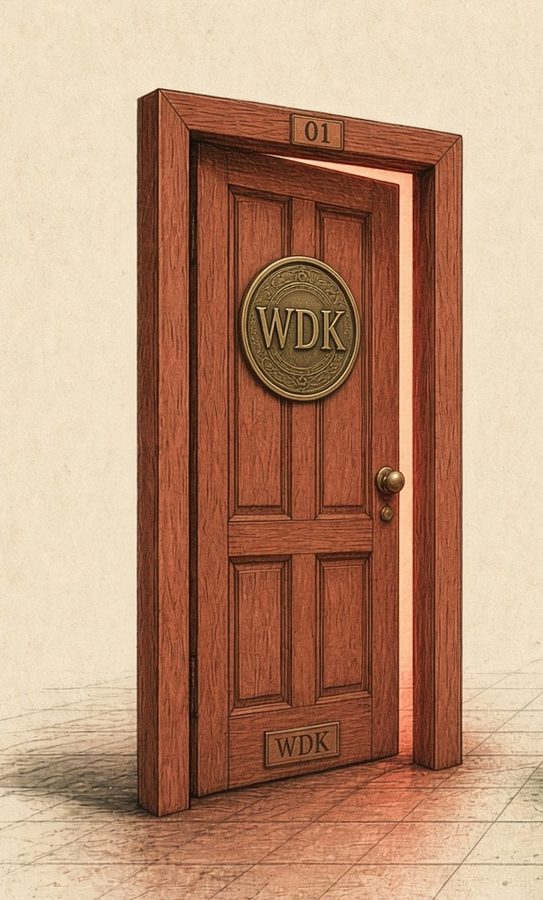
Door 01 - Tether's WDK
Wallet developers

Tether's WDK

0
RGB modules in the kit
0
integration, done once
0
stacks to build yourself
Send/receive BTC over LightningMove RGB assets on the same channelsAuto-open channels via an LSPPay a Lightning AddressBack up Lightning + RGB balances
Early beta

The module is called wdk-rgb-lightning. Before it, a wallet team wanting both Lightning payments and RGB assets had to teach a Lightning node about RGB themselves. Now that work is done once, centrally, and inherited by everyone on the kit.
door 02 what's behind it
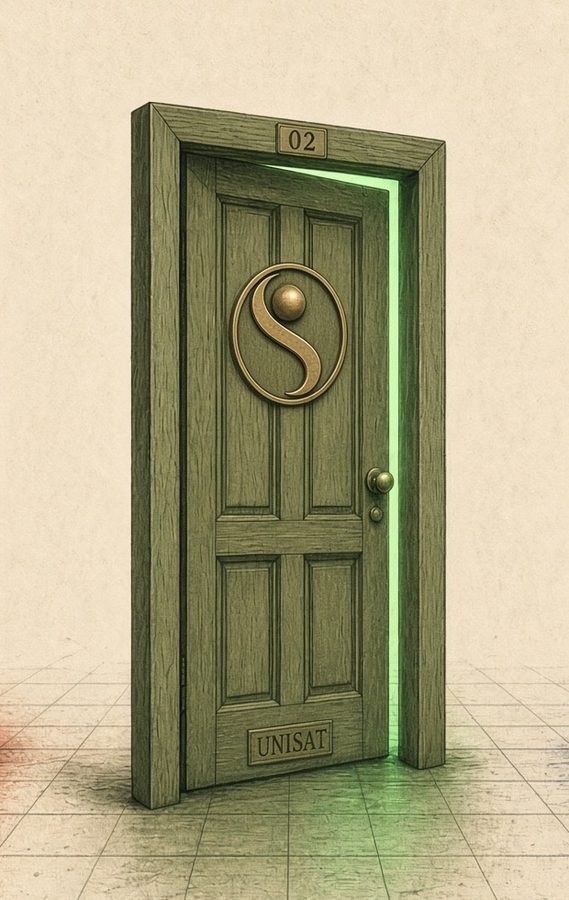
Door 02 - UniSat
Ordinals, Runes and BRC-20 users

UniSat

0M+
weekly actives
0M+
weekly API calls
0
features at launch
Send USDT on BitcoinReceive USDT on BitcoinSwap, inside the wallet
Announced, no date

Named by Utexo as the next launch partner. Notably, neither company's documentation references the integration yet - the announcement came from the X account, and technical detail is expected closer to release.

door 03 what's behind it
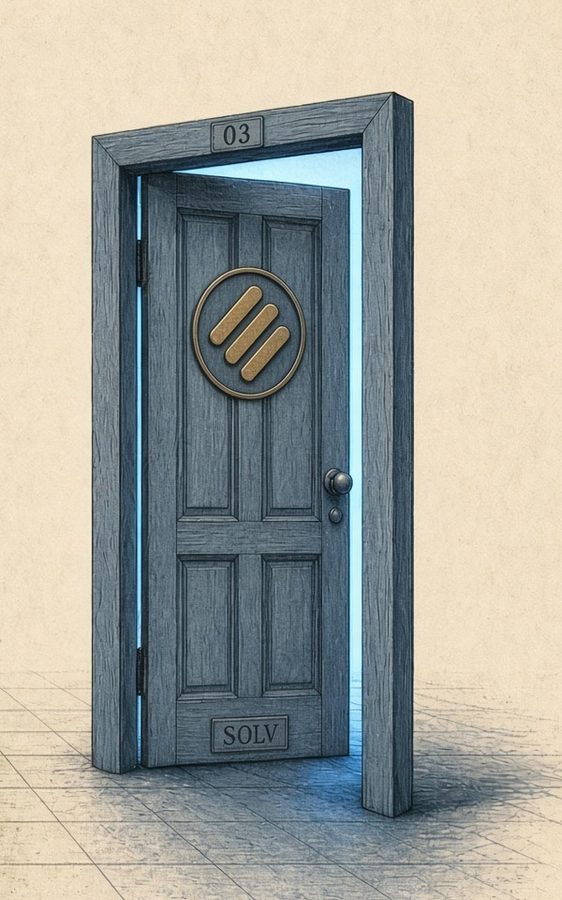
Door 03 - Solv Protocol
Funds, treasuries, institutions

Solv Protocol

$0B+
in reserves
0
wrappers or bridges
0
rail, both assets
Atomic BTC ↔ USDT swapsBitcoin-native yieldNo wrappers, no bridgesSelf-custody preserved
Announced April 2026

Solv was also a strategic angel in Utexo's seed round. Their pitch is a line in the sand: yield built directly on native Bitcoin rails rather than diluted through wrappers and intermediaries.

00the quiet part

The launch everyone is watching for has already started

There is a date-shaped hole in this story. Back in July, Utexo's CTO gave a window for USDT on Bitcoin - end of summer to mid-September - and was careful to call it realistic rather than committed. That window has now passed without a consumer-visible launch.

If you only watch for the announcement, nothing has happened.

If you only watch for the announcement, nothing has happened. But that is the wrong thing to watch, and No. 10 explained why: when your model is business-to-business, there is no launch day. There is only the slow accumulation of places where the thing can appear. And over exactly the weeks that the window slipped, three of those places were quietly nailed down.

So this note is a map of doors. Not the protocol, not the bridge - the specific, named surfaces through which a Bitcoin-native dollar is supposed to reach actual people, and what it will be able to do once it gets there. Because it turns out the answer is not just "payments."

01the developer's door

A module inside somebody else's toolkit

The least visible of the three is probably the most consequential. In August, Tether's own Wallet Development Kit began shipping a Lightning module for RGB assets - built by Utexo, announced from Tether's WDK account.

The hard part gets done once, centrally, and everyone downstream inherits it.

The significance is in who does the hard part. Teaching a Lightning node to understand RGB assets on top of ordinary Bitcoin payments is a serious piece of engineering, and until now every wallet team that wanted both would have had to do it themselves. Now it is done once and inherited. Any wallet on the kit gets Lightning payments, RGB transfers over those same channels, automatic channel opening through a service provider, Lightning Address support, and backups for both balances - without building any of it.

It completes a pair, too: Utexo added on-chain RGB support to WDK back in February, so the kit now covers issuing assets on Bitcoin and moving them at Lightning speed. The caveat is real and stated plainly - it is an early beta, its behaviour can still change, and wallets adopting it now are integrating ahead of a stable release. But the shape is set. The plumbing stopped being each wallet's problem.

02the user's door

The odd couple: an off-chain asset in an on-chain crowd

In early September, Utexo named UniSat as the next launch partner - send, receive and swap USDT on Bitcoin, inside the wallet. On paper it is a numbers story: more than a million weekly actives and over a hundred million weekly API calls, an audience that dwarfs the RGB-native wallets.

An audience trained on fully public assets, meeting one designed to be invisible.

But the interesting part is the mismatch. UniSat's users live on Ordinals, Runes and BRC-20 - asset standards that sit fully on the Bitcoin blockchain, where everything is visible to anyone with an explorer. RGB works the opposite way: the asset data stays off-chain, only a compact commitment is written to Bitcoin, and only the parties to a transfer see the real state.

So the first large audience to meet a Bitcoin-native dollar will be one trained to expect their assets to be publicly inspectable - and will get one that isn't. That is either the fastest possible education in client-side validation, or the source of a lot of confused support tickets. Probably both. Worth noting: as of writing, neither company's docs mention the integration, and no release date has been given.

03the institution's door

Dollars and sats, in the same place, doing more than sitting still

The third door is the one Utexo's own posts have been hinting at all month - lending, swaps, yield; dollars plus sats. It points back to an integration with Solv Protocol, an on-chain Bitcoin asset manager with more than $2 billion in reserves, announced in April.

A rail that only moves money is a rail. This one is starting to do more.

What it enables is atomic swaps between BTC and USDT directly on Bitcoin's rails, and yield generated there rather than somewhere else. The claim being staked is about what is absent: no wrappers, no bridges, no custodial dependency, with self-custody and settlement finality intact. Solv's CEO framed it as drawing a line - that true yield has to be built on native Bitcoin rails instead of being diluted through intermediaries.

This is the part that changes the character of the whole project. A payments rail moves money from A to B. Once the same rail can swap two assets atomically and pay yield on the balance, you have the beginnings of finance on Bitcoin that doesn't route through someone else's chain. Whether that is exciting or alarming depends on how much of the old DeFi playbook comes with it - and that, for now, is genuinely unknown.

04how to read it

Three doors, three different bets

Lined up, the three surfaces are not variations of one strategy - they are three separate wagers on how a new asset actually spreads. The WDK module bets on developers: make the hard thing free and let it propagate through everyone's codebase. UniSat bets on an existing crowd: borrow an audience that is already on Bitcoin, even if their mental model is the opposite of RGB's. Solv bets on balance sheets: give institutions a reason to hold the thing rather than just move it.

Three doors, three wagers - none of them needs a launch day to be judged.

None of them requires a consumer launch event to be true or false. Each one is checkable on its own: does the module leave beta, does UniSat ship a date, does anyone actually earn native yield. That is a far more useful scoreboard than refreshing for an announcement.

One sour note belongs in the record. In mid-September, Utexo's X account was accessed without authorisation for a moment, and afterwards the team reminded people it does not and will never promote tokens or link to other projects promoting theirs - and that any post like that should be treated as malicious. Anticipation is exactly the conditions phishing likes best. While you wait for doors to open, be careful which ones you walk through.